

Other Hernias

Introduction

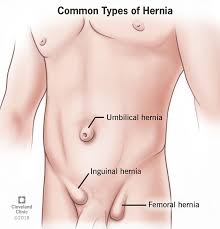
Hernias are abnormal protrusions from the body. They occur at different parts and can be seen across all ages. Inguinal hernias are the commonest form of hernias and are often seen in males but other hernias are frequent and include common ones like epigastric hernia, umbilical hernia and rare ones like femoral, obturator and lumbar hernias.

General Risk factors

  • Family history
  • Collagen disorders such as Marfan’s disease
  • Old age
  • Smoking

General Symptoms

  • Protrusion that worsens in the day and may resolve during sleep
  • Pain over the protrusion
  • Abdominal pain
  • Vomiting, abdominal bloatedness and constipation

Tests

  • Your doctor would perform an abdominal and groin exam.
  • Abdominal ultrasound scan – this helps to characterize the protrusion and to ascertain that there are no pathologies within the abdomen.
  • Computed tomography – This imaging may be needed if there is suspicion of an intraabdominal pathology

Specific hernias

Epigastric hernias

  • They are located above the navel in the midline and may be very painful. They usually do not resolve on their own and may be associated with complications. Surgery is needed in most cases and depending on the size of the hole, you may need a mesh to reinforce the repair. Most repairs are done under numbing injection around the swelling (local anesthesia) and you should go home the same day of the surgery.

Umbilical hernia

  • These are located on the navel itself and may be present from childhood. In some patients, it may be painless. However, some patients may have pain and discomfort or have some cosmetic embarrassment. This may be a reason for repair. As with epigastric hernias, a mesh may be needed to reinforce the repair and prevent recurrence. The procedure is usually done within one hour and you should go home the same day. Most patients prefer awake anesthesia with numbing injection around the surgery site (local anesthesia) while some prefer to sleep (general anesthesia). Please relate your preference to your doctor.

Femoral hernia

  • These are very rare hernias seen in elderly women. The protrusion appears in the groin. These hernias require early repair as they are likely to trap your intestine and cause strangulation (death of the tissue from obstruction of its blood supply).

What happens to the mesh

The mesh acts to provide a temporary support and it is quickly replaced by your native tissue. The mesh disappears completely in about 1-2 years and its function taken over by the thick fibrous tissue that would have developed at the repair site.

Questions to ask your doctor

  • What kind of anesthesia would I be placed under?
  • Would a mesh be used? If no, why not?
  • What is the risk of my hernia recurring after the kind of repair you have chosen to do?
  • How long would I be in hospital admission?
  • When can I resume normal activities?