

Pancreatic Cancer

Introduction

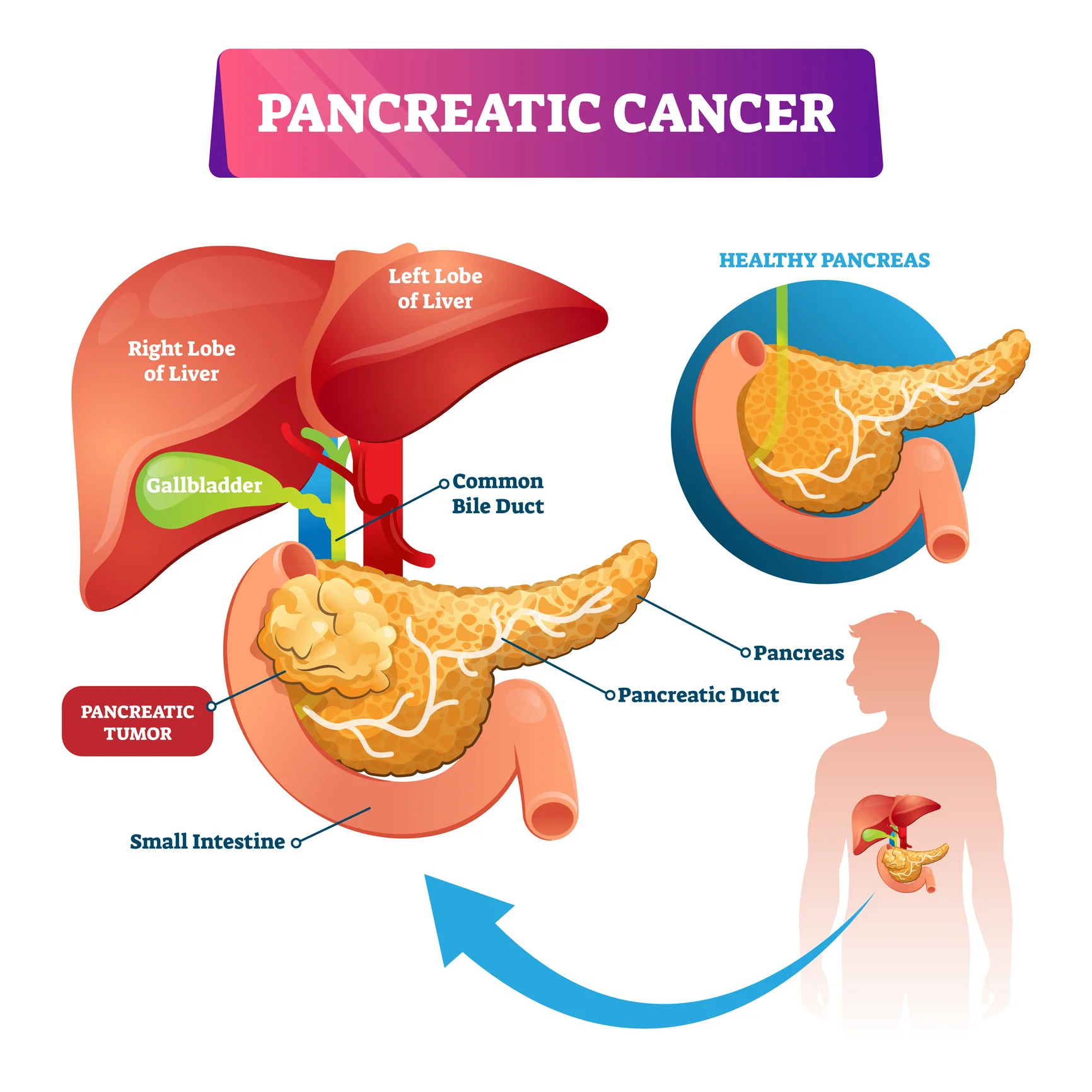
The pancreas is an is fleshy organ located at the back of your tummy. It lies around of the major blood vessels taking blood to and from the lower half of the body and the intestine. It produces digestive enzymes which breakdown food and enable digestion. The pancreas also produces insulin and other hormones that regulate blood sugar levels. Cancer of the pancreas is an aggressive type of cancer that is rare and responsible for less than 5% of all cancers in Nigeria.

Risk factors

  • Smoking
  • Excessive alcohol intake
  • Family history of pancreatic cancers
  • Chronic pancreatitis

Are there screening tests to detect pancreatic cancer?

Sadly, there is no widely accepted screening tool for pancreatic cancer and more often than not, early cancers are found after investigations for other suspected abdominal conditions.

Symptoms of pancreatic cancer

  • Upper abdominal pain that may radiate to the back
  • Nausea
  • Vomiting
  • Yellowness of the eyes
  • Abdominal swelling
  • Weight loss
  • Dark urine (coca-cola colored) and pale stools
  • New onset diabetes
  • Generalized body itching

Tests

  • Blood tests – markers such as CA 19-9 may be assayed. High levels may suggest a problem with the pancreas
  • Abdominal CT – This imaging shows in detail the organs of the abdomen including the pancreas. It is important in diagnosis and staging.
  • Laparoscopy – Your doctor may perform this procedure using a few finger tip incisions to characterize the cancer and take little bits for analysis in the laboratory

Treatment

  • In early stage diseases, surgical removal of the part of the pancreas can be done. This part is often taken with a segment of small intestine and reconstruction is done. It is a major procedure done under anesthesia.
  • Chemotherapy – This modality uses drugs given through your vein (or occasionally by mouth) to help to kill the cancer cells. It is used in patients with advanced disease.
  • Endoscopic retrograde pancreatography – This is an endoscopic procedure similar to Upper GI endoscopy performed in patients with jaundice (yellowness of the eye) form the cancer blocking the bile ducts. A narrow tube is passed and a stent is placed to allow free flow of bile into the intestine.
  • Other surgeries are performed in patients with advanced or late stage disease and may include bypass of the stomach in patients with blockage (gastric outlet obstruction).
  •