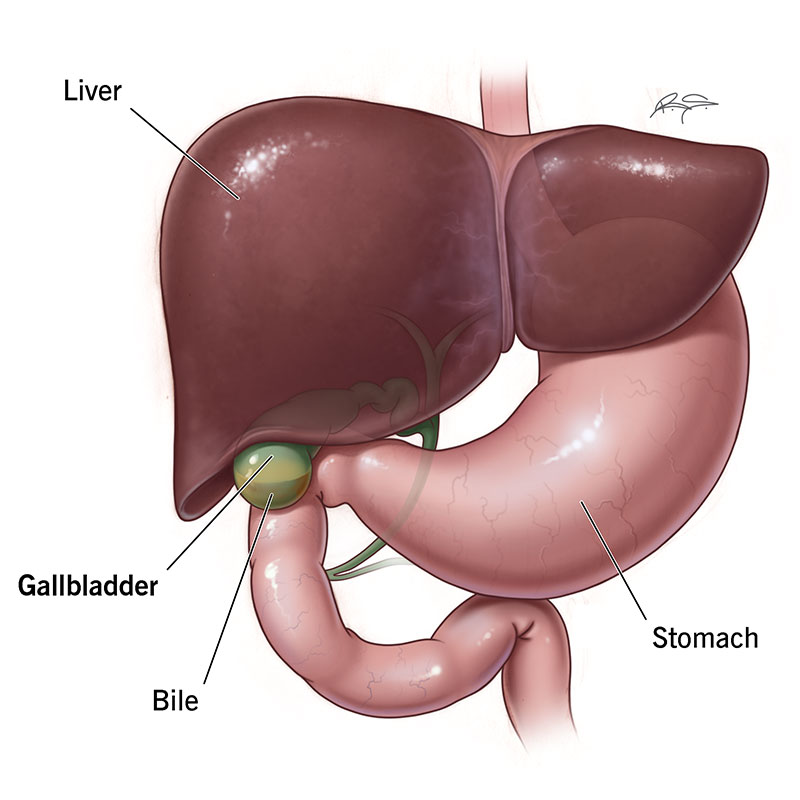
Gall bladder surgery is also known as cholecystectomy and it is the procedure of removal of the
gall bladder. The gallbladder is an organ just under the liver that stores bile which is a byproduct
of the cleansing action of the liver. Bile is stored temporarily in the gallbladder and released into
the intestine when one eats. The gallbladder is not a vital organ and removal results in no
significant effect in humans.
Causes
Conditions that require gall bladder surgery include, severe gall stones, cholecystitis (gallbladder inflammation), and pancreatitis (inflammation of the pancreas) secondary to gallstones, gallbladder cancer, and chronic acalculous gallbladder disease.
Cholecystectomy may be performed using open surgical technique or minimally invasive procedure. Minimally invasive procedure is also known as ‘key-hole surgery’ and involves about 4 key sized wounds on the abdomen. This allows for insertion of the camera and instruments needed to remove the organ. Key-hole surgery is less traumatic than the open surgery and, in most places, has replaced the latter. It causes less tear to the muscles and skin, less pain, more cosmetic scars, early discharge, and early return to work.
The procedure is done under anesthesia and 4 keyhole sized incisions would be made. The gall bladder is dissected of the surrounding structures and removed via one of the keyhole incisions. The sample is sent to the laboratory for analysis to rule out other more sinister pathology. Routinely, feeding can be commenced when you are awake and usually, patients stay on admission for 24-48 hours.
The most common complication associated with the cholecystectomy surgery is bile duct injury, causing leakage of bile secretions causing pain and infection. Other complications may include excessive bleeding, damage to organs, abnormal reaction to anesthesia and development of blood clots.
Gall bladder removal does not cause nutritional deficiencies and does not require any special diet