


Colorectal Cancer
What is an Colorectal Cancer?
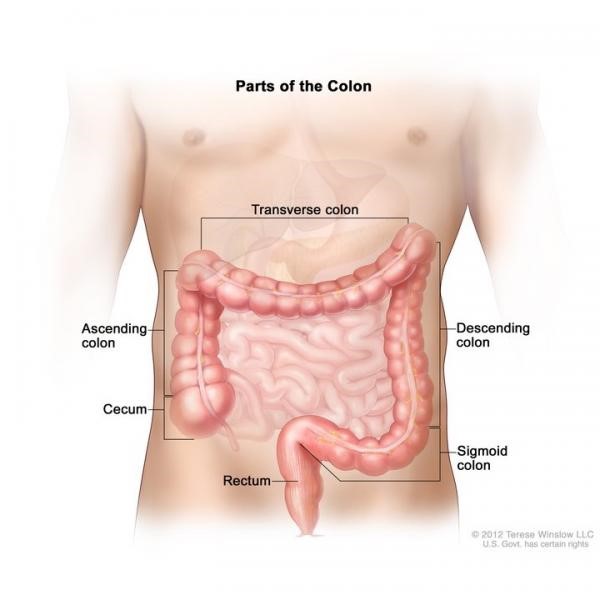
Cancer that involves the colon is called colon cancer while rectal cancer involves the lower part of the intestine called the rectum. Many cancers occur sporadically and usually develop from polyps which are small elevations on the lining of the colon or rectum. The colon itself is about 2 meters long and ends in the rectum which serves as a collecting area for feces pending when bowel movement occurs. People who are particularly at risk for colorectal cancer are those with a family history of cancer, smokers, alcohol intake, poor diet (high red meat) and patients with inflammatory bowel disease.
Symptoms of colorectal cancer
- Change in usual bowel habits with constipation, diarrhea, alternating bowel habits, feeling of incomplete evacuation
- Passage of mucoid stool or pencil shaped stool
- Blood in the stool
- Abdominal pain or swellings
- Weight loss, low level of blood and reduced appetite
Screening for colorectal cancer
Screening enables early detection of colorectal cancers with improved outcomes when these cancers are tackled at an early stage. Most guidelines recommend that screening should commence at the age of 45 years but could be started earlier if there is a strong family history of colorectal polyps and cancer. There are several screening tests for colorectal cancer which includes:
- Fecal immunochemical test – This test looks for occult blood in the stool and is done by lab testing of your stool.
- Fecal DNA test – This tests the genetic material of the cells passed in your stool. It is also a laboratory analysis.
- Flexible sigmoidoscopy – a thin tube is inserted into your anus to visualize the rectum and the sigmoid colon. Polyps can be sighted and removed or biopsied. The instrument used (sigmoidoscope) is not as long as the colonoscope.
- Colonoscopy – This involves the use of a longer scope than the sigmoidoscope and it visualizes the whole colon. Polyps can be removed and samples taken for laboratory testing.
- Double barium enema – This is an X-ray where barium is given as an enema. Information gotten from this modality is limited.
- CT colonography – This modality of imaging is more advanced than the barium enema and gives more information. A contrast dye is usually taken and air insufflated into the rectum. Lesions detected require characterization and sampling sing colonoscopy.
Treatment
Treatment is dependent on several factors which include the diagnosis, the age, comorbidity, presentation ( emergency or walk-in) and the stage or extent of the disease.
Stage 0 – This is early disease and the cancer is located within the lining of the colon or rectum. Removal is through colonoscopic polypectomy or surgery if the polyp is large
Stage I – The cancer has involved the intestinal wall but has not gone beyond the muscular lining or involved lymphnodes. Resection of the colon/rectum at this stage is curative
Stage II – This includes cancer that has involved the wall of the colon and/or involved adjacent tissue. The lymphnodes are not involved at this stage. Surgery to resect the tumour is needed as well as chemotherapy and or radiotherapy.
Stage III – This is an advanced stage of the cancer as there is involvement of the lymphnodes. Patients with stage III disease require surgery, chemotherapy and radiotherapy.
Stage IV – in this stage, there is spread of the cancer to other organs. Surgery is not the mainstay of treatment at this stage and its use is only for prevention/treatment of complications. Chemotherapy and radiotherapy may be needed to improve quality of life and improve symptoms.
Prognosis of patients with colorectal cancer
- Stage – this is the most important factor determining outcome. Early stage cancers (stage 0, I and II) have high survival rates than advanced and metastatic cancers (stage III and IV)
- Lymphnode involvement – More lymphnode glands involved in the cancer, the worse the prognosis.
- Quality of surgery/surgeon – The correct surgery performed by a specialist surgeon trained in colorectal surgery is key. Complete excision is the goal to preventing recurrence which studies have shown to be higher in patients operated by surgeons with no training in colorectal surgery.
Contact
- 07016222580
- Email : info@thesurgicalclinic.ng
- Plot 348 Chibuzor Chinyere Crescent, Guzape, Abuja
Newsletter
- © 2026 The Surgical Clinic