

Benign Breast Lumps

Introduction

Breast lumps are swellings occurring in the breast. Patients are usually alarmed at this due to the fear of it being cancerous. Clearly, your doctor would try to distinguish between a benign lump and a cancerous one as this is important in outlining the treatment steps. Most benign breast lumps appear in young adolescent and can be due to the hoornal effect on the growing breasts. There are several types of benign breast lumps

  • Fibroadenomas – commonest breast lump in young women. It is non cancerous and usually feels firm, rubbery and mobile.
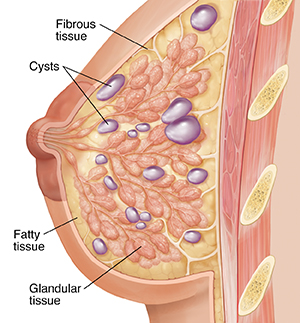
  • Breast cysts – fluid filled sacs. They are often seen in older women
  • Fibrocystic changes – multiple tiny fluid filled sacs and rubbery tissue which are vague in texture.
  • Breast infection – infection of the breast tissue may present as a lump. In severe cases it may form an abscess. Patients with this condition are often lactating women.

Symptoms

  • Lump on the breast
  • Breast pain/discomfort which may/may not be cyclical
  • Asymmetry of the breasts
  • Redness of the breast skin

Tests

  • Breast examination by your doctor for both breasts including your armpits
  • Breast ultrasound – This imaging modality is often the first choice for young women to characterize the lump and to check for other problems in both breasts
  • Mammography – this is usually done in older women. It is a form of X-ray of the breast.
  • Breast MRI – This modality can be requested for in inconclusive cases and utilizes magnetic fields to create detailed breast imaging

Treatment

  • Non-operative – Small lumps, fibrocystic changes and most breast infections are managed non operatively. Some lumps may resolve at the end of the menstrual cycle, while antibiotics may be given if the lump is caused by an infection.
  • Fluid drainage can be done for simple breast cysts
  • Removal of the lump (excision biopsy) is needed in lumps which are painful, disfiguring or large. The procedure is done under local anesthesia where numbing fluid is injected around the incision site and the lump taken out. The specimen is sent to the laboratory to rule out sinister pathology. The procedure lasts about 30 minutes and the patient is discharged in the same day. If after the procedure, the wound is soiled with a lot of blood or you feel dizzy, present at the nearest hospital.

Self breast examination

Patients are advised to undergo self breast examination regularly and present to the doctor if there are any concerns. Please watch this video