


Anal Abscess
Anal abscess/fistula
Anal abscess is a collection of pus due to infection around the anal region. The anus normally contains small glands that produce mucus. These glands may occasionally get blocked and infected leading to abscess formation. Patients at risk are those who have some form of reduced immunity from diabetes, chronic steroid use or patients with HIV/AIDS. Other causes include Crohn’s disease, radiation, trauma, sexually transmitted diseases, tuberculosis or cancer
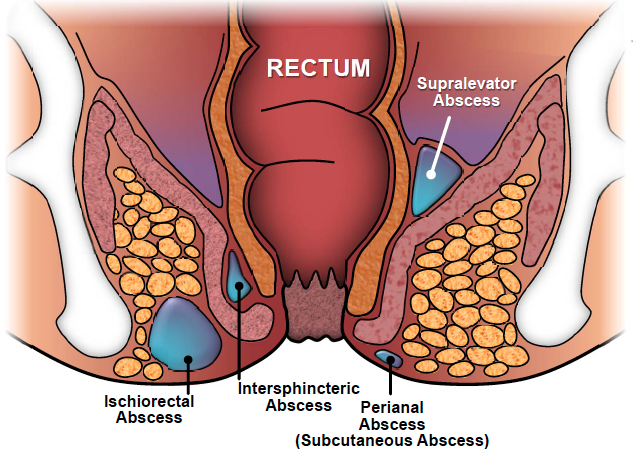
Symptoms
- Pain at the anus worse on sitting or defecation
- Fever and generalized feeling of being unwell
- Anal swelling
Treatment
Abscesses need to be drained under anesthesia and the area thoroughly cleaned. You would be placed on antibiotics, pain killers and some stool softeners. You would be required to do sitz baths to help clean the area and improve healing.
The wound is usually left open so that new pus does not accumulate, and the wound then fills from inside out. Complete wound healing should be expected within four weeks.
Anal fistula
This is often a complication of anal abscesses where an abnormal communication or tunnel forms between the inner lining of the anus and the exterior. It is a complication of about 20-40% of anal abscesses.
Symptoms
- Foul smelling intermittent discharge which may be bloody
- Pain with bowel movement
- Welling
- Soilage of underwear
- Itching
Test
- Your doctor would examine you and inspect the area around your anus. He would use a well lubricated finger to assess the inner lining of your anus. Ocassionally, your surgeon may require to examine you in the operating room (called exam under anesthesia) to diagnose the fistula.
- Transrectal ultrasound – this is a test where an ultrasound probe is inserted through your anus to view the fistula. It give good information about the internal and external openings and the tract formed
- Magnetic resonance imaging – This is a form of imaging that is important in delinating the tracts of the fistula.
- Fistulogram – In this test, a small tube is passed into the external opening and dye injected to outline the tract of the fistula. Subsequently, x-ray images are taken.
Treatment
- Most patients require some form of surgery for anal fistula. The exact surgery would be based on the findings of imaging and at surgery
- For the simple fistula, the internal and external openings are obliterated by removing the tract. This is called a fistulotomy and involves connecting both openings and curetting the tract so that healthy tissue fills it and occludes the fistula. Most patients go home within 24-48hours and continue Sitz Baths at home. The wound heals mostly within 4 – 6 weeks
- Seton placement – This is used for complex fistulas involving the anal sphincters – the muscle that controls opening of the anus for defecation. As the muscles cannot be split (increased risk of incontinence), a string/thread material is placed connecting the inner and external openings with gradual closure from the seton inciting healthy tissue formation. The seton may stay on for weeks and require adjustment as needed by your doctor.
Complications of appendicitis
- Appendix mass – This occurs when the inflamed appendix is wrapped around by segments of your intestine and fat. This is the initial attempt of the body to limit the spread of the infection. You may have abdominal pain with a lump felt around your right lower abdomen. Once you present with this condition, you would be admitted, started on intravenous fluids and antibiotics and you would be advised to stay of meals. The mass usually resolves in a couple of days and you may be discharged for surgery in 6weeks. However, if you do not get better after 48hours of care and you have worsening abdominal pain and look sicker, it may mean an abscess has formed and you need to have it drained.
- Abscess – An abscess is a collection of pus. This may occur in untreated appendicitis where there is extensive inflammation and pus formation. These patients would have a high fever with abdominal pain and look sick. Depending on the extent, you may need the abscess drained before surgery or they are done in the same sitting.
- Abdominal spread – The infection may progress from the right lower part of the belly and involve the entire abdomen. In this case, the procedure becomes a major surgery as the whole abdomen needs to be cleaned out after removal of the appendix.
Prevention
- Typical African diet rich in high fibre has been noted to be associated with a reduced risk of acute appendicitis.
Contact
- 07016222580
- Email : info@thesurgicalclinic.ng
- Plot 348 Chibuzor Chinyere Crescent, Guzape, Abuja
Newsletter
- © 2026 The Surgical Clinic